

Why a growth mindset culture is more than a slogan—and how real planning helps you deliver results, develop people, and adapt to disruption.
A growth mindset culture doesn’t emerge from motivational posters or quarterly offsites. It’s built—and sustained—through intentional planning, daily behaviors, and systems that make development as normal as deadlines.
In organizations that thrive through change—AI disruption, economic instability, innovation from competitors—growth isn’t a department. It’s a mindset lived across teams. But for that mindset to take hold, leaders need more than good intentions. They need a real planning framework that aligns development with delivery.
Let’s explore how growth cultures operate under pressure, how to build one with your team, and why the way you plan tells the truth about how you lead.
Culture isn’t just belief. It’s behavior in motion.
What Is a Growth Mindset Culture—Really?
At its core, a growth mindset culture considers that:
- People can develop through feedback, effort, and coaching
- Intelligence and skill are not fixed—they’re stretchable
- Risk-taking and learning are encouraged, not punished
But here’s the catch. Culture isn’t just belief. It’s behavior in motion. That’s why real planning plays such a crucial role in making these ideas stick.
What Real Planning Looks Like—and Why It Fuels Strategic Growth
Real planning is how high-trust organizations stay clear, calm, and creative when others spiral into short-term reactivity. It transforms development from an annual event into a continuous system.
Here’s what sets real planning apart:
1. It’s Grounded in Reality
Real planning starts with truth—not assumptions. It’s built on actual risks, constraints, and changing landscapes. Leaders consider external factors like:
- AI disruptions
- Supply chain instability
- Weather-related interruptions
- Economic fluctuations
This honest approach creates trust, builds psychological safety, and models resilience.
2. It Connects Long-Term Vision with Short-Term Action
Great leaders don’t sacrifice long-term goals for short-term gains. They break large outcomes into doable milestones, building confidence with every step. A growth mindset culture thrives on this kind of momentum.
Growth cultures engage cross-functional teams in the creation of plans, not just their execution.
3. It Builds Contingencies Before Crisis Hits
Contingency planning isn’t fear-driven—it’s freedom-driven. Teams feel less anxious when they know there’s a backup plan. They stay agile, aligned, and accountable.
This is risk resolution in motion, and it’s a hallmark of sustainable leadership cultures.
4. It’s Built with People—Not Just for Them
Growth cultures engage cross-functional teams in the creation of plans, not just their execution. This taps into interdependence and reinforces shared ownership—key to team cohesion and innovation.
5. It Develops People While Delivering Results
Real planning turns work into learning. When teams practice communication, decision-making, and feedback in real-time, they’re not just checking boxes—they’re growing as leaders.
Growth Mindset Culture in Action with Leadership Behaviors That Make It Real
The success of your culture isn’t in your slogans—it’s in your habits.
Here are five ways leaders reinforce or erode a growth mindset through everyday behavior:
- They Normalize Risk Instead of Punishing It
What happens when someone takes a smart risk and fails? Is there reflection—or blame? Growth-driven leaders treat failure as feedback and debrief constructively. This builds trust and encourages continuous learning.
- They Stay Curious When They Don’t Have the Answer
Controlling leaders stifle creativity. Growth-oriented leaders ask, “What would you try if you knew I had your back?”
That one question fuels empowerment, experimentation, and deeper engagement.
- They Protect Development During High-Pressure Cycles
Even during crunch time, growth cultures don’t pause learning. They integrate development into sprints, post-mortems, and team conversations. Leaders use weekly 1:1s to reflect—not just report.
- They Practice Micro-Routines that Reinforce Learning
A 5-minute debrief. A real-time coaching moment. A weekly highlight of a learning win. These simple actions signal that growth is a daily priority—not a quarterly theme.
- They Invest in Group Process Skills
Culture isn’t just emotional—it’s operational. That means investing in how teams make decisions, solve problems, and recover clarity when tensions rise.
Training in conflict resolution, peer feedback, and collaborative planning doesn’t just create better meetings—it creates healthier, faster-moving teams.
Real Planning Makes Growth Sustainable
When you design your operations around real planning, your team learns how to:
- Think long-term under short-term pressure
- Pivot without panic
- Grow through real-world experience—not just training materials
That’s when a growth mindset culture becomes a strategic asset—not just an aspiration.
It’s not just the words on your website. It’s how your people behave when the heat is on.
The TIGERS 6 Principles Make Growth Work
Culture change is only possible when leadership behavior is consistent—and consistently reinforced. That’s why behaviors anchored by Trust, Interdependence, Genuineness, Empathy, Risk Resolution, and Success form the backbone of growth cultures that last.
Each principle contributes:
- Trust makes truth possible
- Interdependence makes collaboration effective
- Genuineness makes feedback real
- Empathy makes risk-taking safe
- Risk makes innovation sustainable
- Success makes development measurable
These aren’t buzzwords. They’re the behavioral glue that keeps culture, performance, and innovation aligned—even when everything else is in flux.
Final Thought
If your team is feeling the squeeze between short-term pressure and long-term goals, stop asking what to cut—and start asking what to reinforce.
Your culture can either default to survival—or double down on growth.
Start with planning.
Start with behavior.
That’s how sustainable leadership begins.
Copyright TIGERS Success Series, Inc. by Dianne Crampton
 About the TIGERS 6 Principles
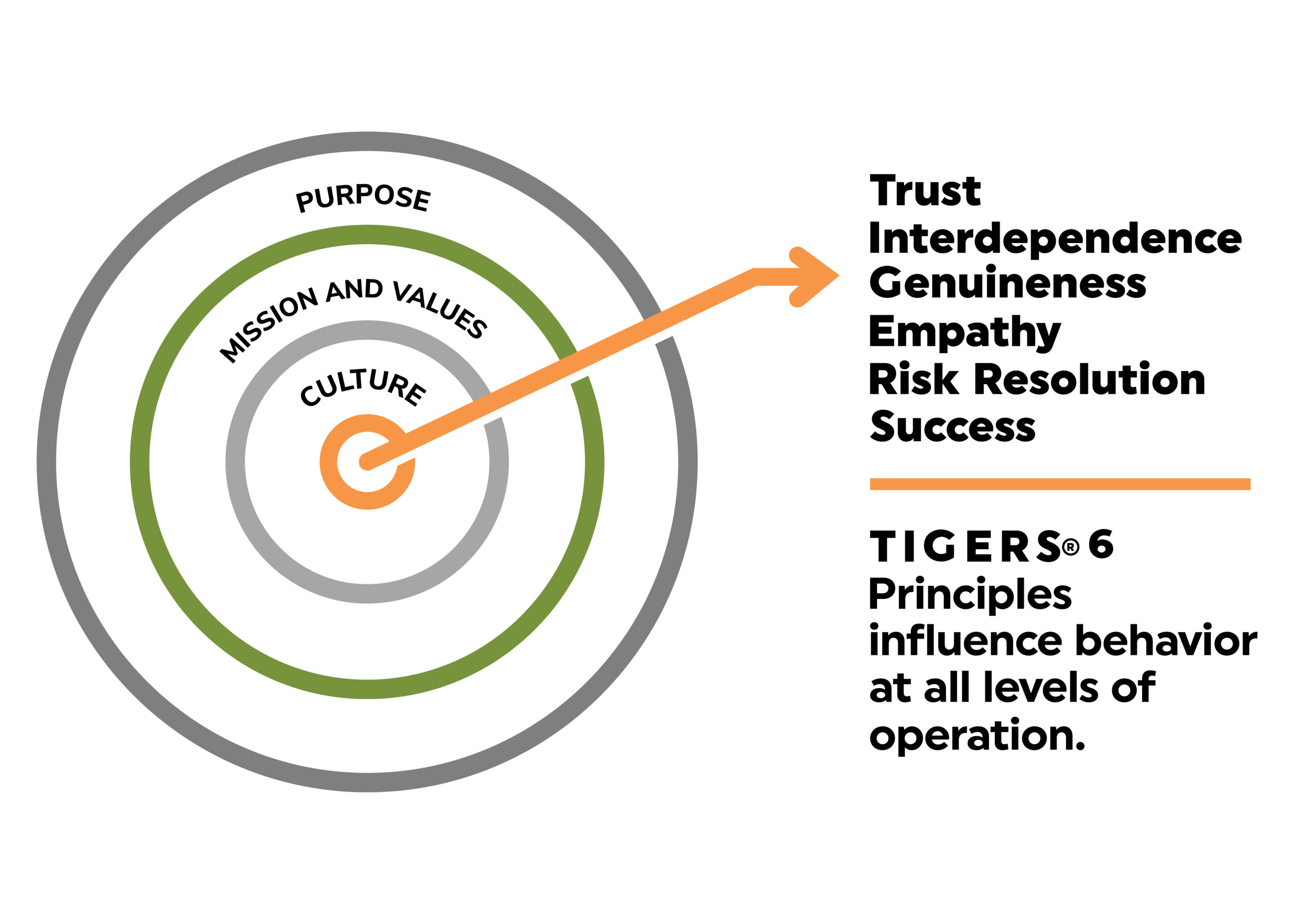 About the TIGERS 6 Principles
The TIGERS 6 Principles provide a comprehensive and robust system for improving both your work environment and profitability.
We specialize in training your managers in group facilitation methods that build workforce cooperation and high performance team dynamics. Scaled to grow as your organization and leadership performance grows, our proprietary Managment training workshops are based on the six principles we have found to be the right mix to make this happen.
Born from our many years of business, psychology, and educational group dynamic research, and subsequent four years of independent evaluation, the TIGERS 6 Principles instill and sustain behaviors that improve work group performance and talent retention for measurable ROI.
