
 Trust and interdependence aren’t just leadership buzzwords. They’re the essential fuel that keeps teams aligned, accountable, and resilient in a world of constant change. Strong leadership today isn’t just about delivering results—it’s about creating the conditions where people can thrive together. That’s why we developed the TIGERS 6 Principles™—a framework of six measurable, behavior-based values that drive lasting team success: Trust, Interdependence, Genuineness, Empathy, Risk Resolution, and Success.
While each principle strengthens culture in its own way, they don’t operate in isolation. They’re designed to work together—to be synergistic.
And when Trust and Interdependence are both strong, something powerful happens:
- Teams collaborate naturally.
- Silos dissolve.
- People speak up, step up, and support one another.
This post explores what happens when those two principles work in harmony—and what goes wrong when they don’t.
Trust and Interdependence improve team performance and collaboration
For leaders striving to improve team performance and collaboration, few things are more frustrating than seeing potential trapped behind walls of miscommunication and mistrust. Silos don’t just happen across departments—they form between individuals, around responsibilities, and even within teams that genuinely care but don’t know how to work together.
High trust and high interdependence are more than check-the-box concepts. They’re a dynamic duo that changes how people work, how they feel about their work, and how teams function.
When both are strong, you see the difference in three areas:
1. Goals:
Clear, shared goals replace personal agendas. People understand what they’re working toward and feel safe enough to admit when they need help.
2. Roles:
Everyone knows where they contribute value—and how their role connects to others. Trust allows for healthy overlap. Interdependence ensures no one is operating in a vacuum.
3. Relationships:
Communication isn’t just more frequent—it’s more honest, respectful, and productive. People step forward, not back. They offer help, not blame.
What happens when trust and interdependence don’t work together?
Trust without Interdependence — You might have a team of respectful individuals who never truly collaborate. They “stay in their lanes” to avoid stepping on toes, missing out on innovation and shared wins.
Interdependence without Trust –You get silos. People do not work together. They protect their assets. They hord information. They compete and your organization pays the bill.
Now a story
Two mid-level leaders—let’s call them Jamal and Jennifer—were managing separate teams that had overlapping responsibilities. The company structure wasn’t designed to promote collaboration, and both leaders often found themselves scrambling to meet project deadlines because their teams weren’t aligned.
At first, Jamal and Jennifer were polite but guarded. They avoided confrontation and kept their communication transactional. Their teams followed suit. Meetings were checklists, not conversations. Trust was low, and so was interdependence.
But things started to shift after they both participated in a trust-building workshop. Instead of focusing only on surface-level communication, they explored behavioral patterns—what trust looks like in action and what happens when it’s broken.
Sara reached out first. She proposed a shared planning meeting—not just between the two of them, but with key team members on both sides. Jamal agreed, and they co-facilitated the discussion. It was awkward at first, but over time, a new rhythm formed. Weekly touchpoints became part of the culture. Shared wins were celebrated publicly. Overlaps were clarified, not resented.
One day, Sara’s team member praised Jamal’s team in a company-wide meeting. It wasn’t scripted. It was real.
Trust and interdependence were no longer aspirational. They were operational.
If you’re seeing signs of siloed behavior in your workplace, start here
Model vulnerability and invite feedback. Clarify shared goals—and make them visible. Ask: “Where do we depend on each other, and what does that require of us behaviorally?”. And reflect on where trust breaks down and who’s being left out. When trust and interdependence work in tandem, collaboration isn’t just smoother—it’s sustainable. And that’s how real culture change begins.
When teams operate with both high trust and high interdependence, something remarkable happens. People start to anticipate one another’s needs. Collaboration becomes proactive rather than reactive. Workloads balance out, not because someone assigns them, but because the team self-regulates based on mutual support and accountability. Deadlines are met not out of fear, but out of shared pride. And when problems arise, they’re addressed quickly—because people feel safe naming them and know they won’t be left alone to fix them.
The rest of the story
Let’s revisit the story of Sam and Jennifer with a little more depth. Before their breakthrough, both leaders had unknowingly contributed to the silo effect. Sam had built a tight-knit team that prized autonomy but rarely consulted other departments. Jennifer, in contrast, had created a team culture of dependency on her direction, resulting in slow decisions and reluctance to collaborate outside their circle. When deadlines began slipping due to overlapping initiatives, tensions ran high. Each blamed the other.
The turning point came not in a meeting, but over coffee. A mutual mentor encouraged them to share not what their teams were doing—but what was making their jobs hard. That small act of vulnerability created a ripple. Sam confessed that he didn’t feel like he could speak openly about capacity issues. Jennifer admitted she often second-guessed her authority because she felt siloed from company strategy.
They decided to try something radical. The scheduled weekly ten-minute trust check-ins between them, followed by a shared planning email that went to both teams. Within a month, their teams began brainstorming solutions together instead of defending turf. Accountability was no longer top-down. It was peer-to-peer. And as trust and interdependence grew, something else surfaced—joy in the work again.
This is what happens when leaders stop operating in isolation and begin modeling connection.
It’s important to acknowledge that this kind of change isn’t easy. Leaders may fear that sharing decision-making means giving up control. Team members may worry that relying on others will slow them down or expose them to criticism. These are valid fears, especially in competitive, fast-paced work cultures. But what we’ve seen, over and over again, is that silos don’t protect people—they isolate them. And they stunt the kind of growth that gives work meaning.
High trust and interdependence don’t just improve performance metrics—they transform culture. Employees stay longer, teams solve problems faster, and leaders find themselves spending less time managing conflict and more time building opportunity.
So where do you start?
You already know that leadership isn’t about having all the answers. It’s about being willing to go first. To ask the harder questions. To model the kind of behavior that makes others feel safe enough to grow.
And as always, if you’re reading this and recognizing the silos in your own workplace—know that you’re not alone. Know that change is possible. And know that it starts with you.
Copyright © TIGERS Success Series, Inc. by Dianne Crampton
 About the TIGERS 6 Principles
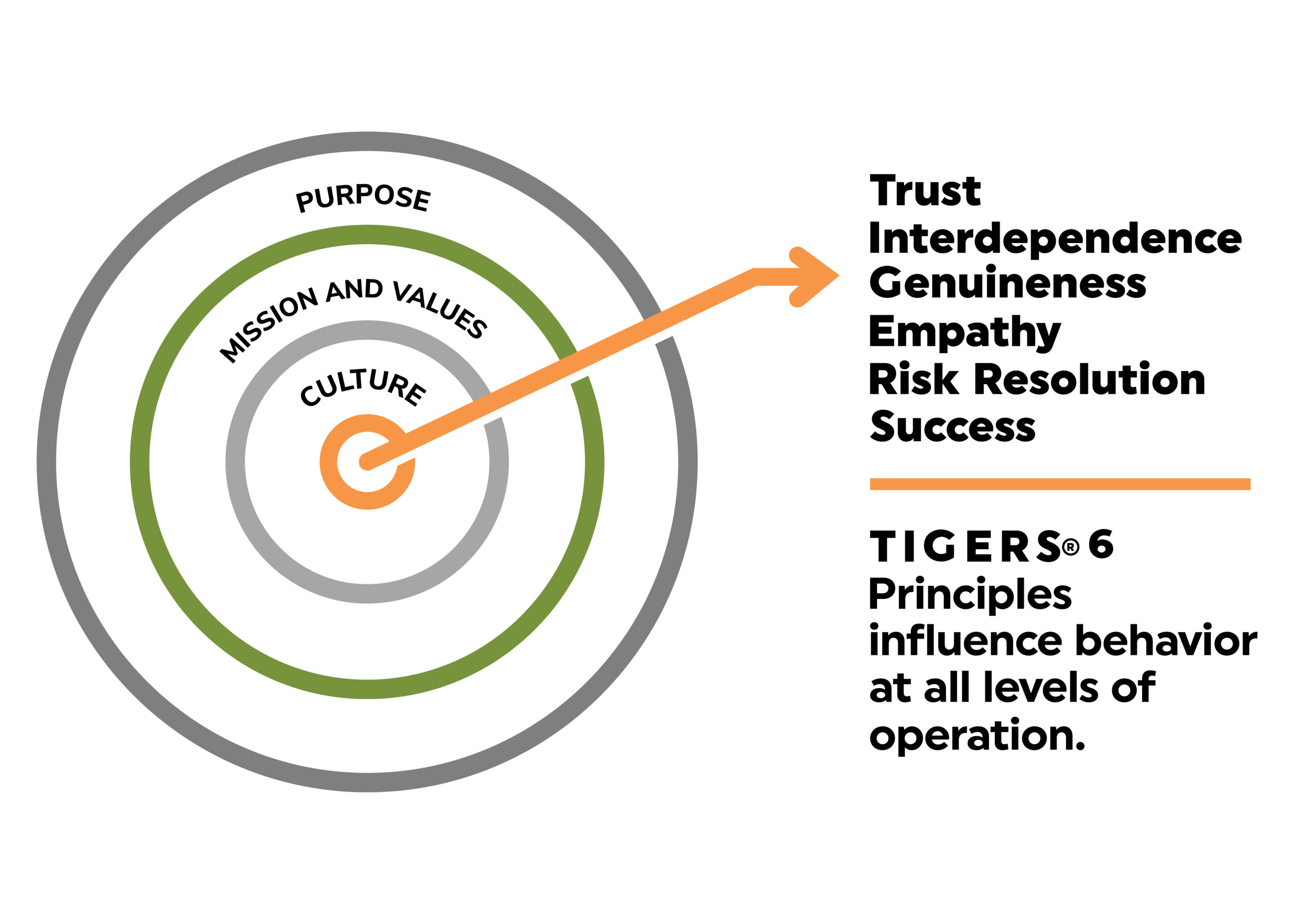 About the TIGERS 6 Principles
The TIGERS 6 Principle provides a comprehensive, multi-pronged and robust system for improving your work environment, employee engagement and profitability.
We specialize in building workforce cooperation and high performance team outcomes. Scaled to grow as your organization and leadership performance grows, our proprietary Team Behavior Profile and Management training workshops are based on the six principles we have found to be the right mix to make this happen.
The TIGERS 6 Principles are Trust, Interdependence, Genuineness, Empathy, Risk and Success. Born from our many years of business, psychology, and educational group dynamic research, and subsequent four years of independent evaluation, we instill and sustain behaviors that improve work group performance and talent retention for measurable ROI.
