
 Guest post by Barbara Brooks Kimmel
The headlines “say it all” so why do business executives continue to demand a business case for trust?
The Hard Costs of Low Trust
- Gallup’s research (2011) places 71% percent of U.S. workers as either not engaged or actively disengaged. The price tag of disengagement (Gallup) is $350 billion a year. That roughly approximates the annual combined revenue of Apple, General Motors and General Electric.
- The Washington Post reported that “the federal government imposed an estimated $216 billion in regulatory costs on the economy (in 2012), nearly double its previous record.” The cost of the tort litigation system alone in the United States is over $250 billion. – or 2% of GDP, Forbes, January 2012
- The six biggest U.S. banks, led by JP Morgan Chase & Co. and Bank of America Corp. have piled up $103 billion in legal costs since the financial crisis, Bloomberg, August 2013
- According to The Economist Intelligence Unit (2010), 84% percent of senior leaders say disengaged employees are considered one of the biggest threats facing their business. However, only 12% percent of them reported doing anything about this problem.
- According to Edelman globally, 50% of consumers trust businesses, but just 18% trust business leadership.
- And finally, in the United States, the statistics are similar, but the story is a bit worse for leadership. While 50% of U.S. consumers trust businesses, just 15% trust business leadership.
This trust gap negatively impacts a company’s revenue, market share, brand reputation, employee engagement and turnover, stock price, and bottom line profitability.
The Low Cost of Hard Trust
Building a trustworthy business will improve a company’s profitability and organizational sustainability. A compelling body of evidence shows increasing correlation between trustworthiness and superior financial performance. Over the past decade, a series of qualitative and quantitative studies have built a strong case for senior business leaders to place building trust among stakeholders high on their priority list. While none of these studies are perfect, over the next decade their results will be increasingly difficult to ignore.
In a Harvard Business School working paper from July 2013 called The Impact of Corporate Sustainability on Organizational Processes and Performance, Robert G. Eccles, Ioannis Ioannou, and George Serafeim provide evidence that High Sustainability companies (those integrating both environmental and social issues) significantly outperform their counterparts over the long-term, both in terms of stock market as well as accounting performance.
According to Fortune’s “100 Best Companies to Work For”, based on Great Place to Work Employee Surveys, best companies experience as much as 50% less turnover and Great Workplaces perform more than 2X better than the general market (Source Russell Investment Group)
Forbes and GMI Ratings have produced the “Most Trustworthy Companies” list for the past six years. They examine over 8,000 firms traded on U.S. stock exchanges using forensic accounting measures. The conclusions they draw are:
- “… the cost of capital of the most trustworthy companies is lower …”
- “… outperform their peers over the long run …”
- “… their risk of negative events is minimized …”
FACTS®. After years of reviewing such studies and vetting independent data providers, Trust Across America – Trust Around the World_ (TAA-TAW) has been blending five indicators of trustworthy business in its unique FACTS® Framework: Financial Stability, Accounting Integrity, Corporate Governance, Transparency, and Sustainability The FACTS monthly (rebalanced) portfolio of 25 trustworthy companies significantly outperformed the S&P 500 index, (64.29% vs. 28.74% since August 2012).
Numerous indirect indicators of trust also show a direct correlation to superior financial performance.
From Deutsche Bank:
- 100% concurrence on Lower Cost of Capital
(“… academic studies agree that companies with high ratings for CSR (corporate social responsibility) and ESG (environment, social responsibility, governance) factors have a lower cost of capital in terms of debt (loans and bonds) and equity.”)
- 89% concurrence on Superior Market Performance
(“,,,studies indicate companies with high ratings for ESG factors outperform market-based indices”)
- 85% concurrence on Greater Performance on Accounting –Based Standards
(“… studies reveal these types of company’s consistently outperform their rivals on accounting-based criteria.”)
From Global Alliance for Banking on Values, which compared values-based and sustainable banks to their big-bank rivals and found:
- 7% higher Return on Equity for values-based banks
(7.1% ROE compared to 6.6% for big banks).
- 51% higher Return On Assets for sustainable banks
(.50% average ROA for sustainable banks compared to big bank earning 0.33%)
These studies are bolstered by numerous other analyses from respected sources such as the American Association of Individual Investors, the Dutch University of Maastricht and Erasmus University, and Harvard Business Review. The next time a business leader challenges you to prove the business case for trust, please share this article with them. There is a business case for trust. Trust works.
About Trust Across America
This video podcast discusses the genesis of Trust Across America and the significance of monitoring Organizational Trust.
Copyright Barbara Brooks Kimmel and 2013 Next Decade, Inc
 About Barbara and Trust Across America – Trust Around the World

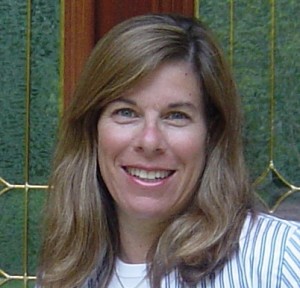
Barbara Brooks Kimmel is Cofounder and Executive Director of Trust Across America –Trust Around the World and editor of Trust Inc. Strategies for Building Your Company’s Most Valuable Asset. In 2012 Barbara was named one of “25 Women who are Changing the World” by Good Business International.
Learn more about Barbara’s core motivation for stepping into the light to build more trust in the world of work and commerce in this podcast.
To learn about tools designed to improve group norms around trust in business culture and team dynamics click here.

Trust in business relationships among all stakeholders has been a soft concept in the backs of the minds of executives. This work further illustrates the hard case for trust. C-suite execs and boardroom directors, you ignore trust at your own peril.